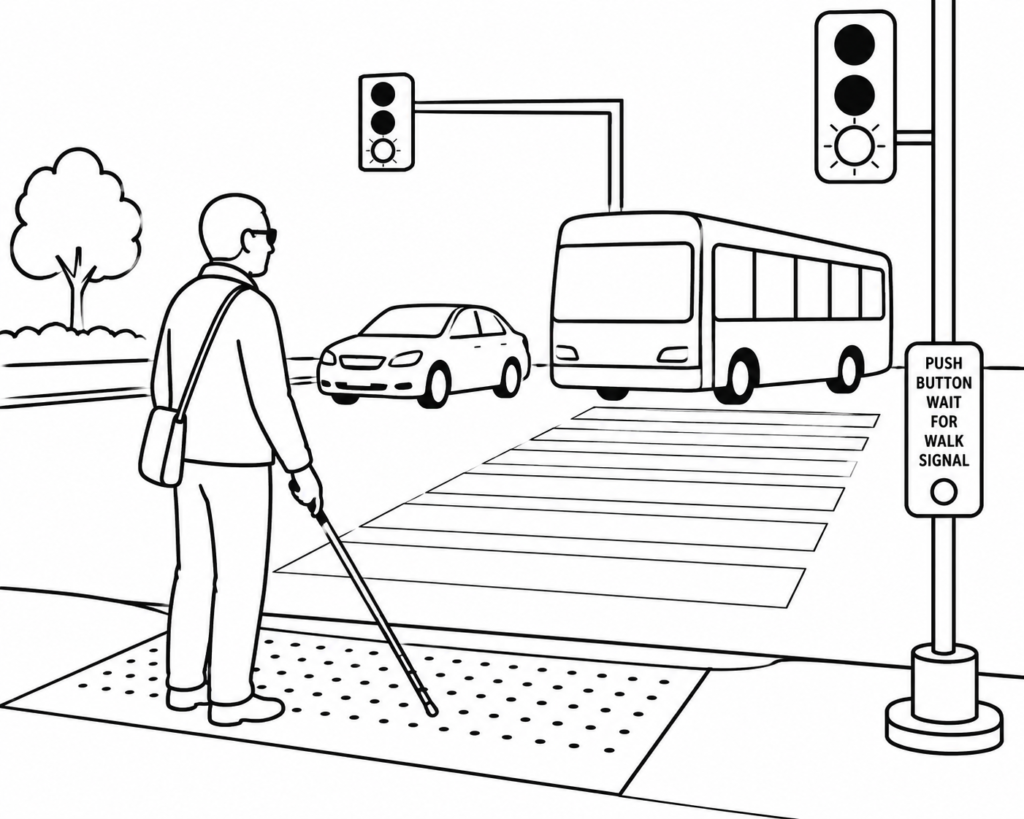
I used to think mindfulness meant learning to accept things exactly as they are. Losing sight complicated that idea. There is a difference between accepting the reality of vision loss and accepting a world that unnecessarily excludes people.
Trying to cross a busy intersection as a blind person can be a perfect place to notice anxiety, uncertainty, helplessness, and fear. Mindfulness may help me become aware of those reactions rather than immediately resisting them. But awareness also raises another question: how much of the difficulty belongs to blindness itself, and how much belongs to the way our environments are designed?
There is a difference between accepting the reality of vision loss and quietly accepting inaccessible systems, neglected public transport, dangerous crossings, and communities built around assumptions of sight.
There is a difference between accepting what is unavoidable and quietly accepting what could, and perhaps should, be changed.
Leave a Reply